The upcoming trends of Aluminum Foundry in eco manufacturing
Understanding the Value of Aluminum Foundry in the Aerospace and Automotive Industries
Aluminum foundries are indispensable to the aerospace and vehicle markets. They provide vital light-weight elements that add to total performance and performance. The unique residential properties of aluminum deal distinct advantages in manufacturing. As developments in technology and sustainable techniques arise, the duty of these foundries is developing. Comprehending these aspects raises important concerns about the future of transportation and technology. What ramifications do these advancements hold for the industries at huge?
The Duty of Aluminum Foundries in Production Lightweight Parts
Aluminum foundries play a pivotal duty in the aerospace and auto markets by producing lightweight elements that enhance performance and fuel effectiveness. The need for lighter products has actually risen as manufacturers look for to decrease general vehicle weight, leading to boosted fuel economy and reduced discharges. Aluminum's one-of-a-kind homes, consisting of high strength-to-weight proportion and corrosion resistance, make it a perfect option for different applications.
Elements such as engine blocks, transmission real estates, and architectural elements take advantage of aluminum's pliability and ease of spreading, providing the needed stamina while minimizing weight. Furthermore, aluminum's recyclability aligns with sustainable production techniques, further driving its fostering in these sectors. Shops utilize specific methods to assure perfect material buildings, assisting in innovations in style and modern technology. Eventually, aluminum foundries are important in fulfilling the advancing needs of aerospace and automotive markets, contributing to advancements in security, efficiency, and ecological responsibility.
Advanced Casting Techniques Used in Aerospace and Automotive Applications
In the aerospace and automotive sectors, advanced casting strategies have actually become essential for enhancing performance and performance. Precision casting techniques, together with lightweight alloy innovations, allow the production of components that satisfy rigorous market requirements. In addition, the combination of additive production better changes design possibilities, enabling higher customization and intricacy partly.
Precision Casting Approaches
While industries such as aerospace and automobile progressively need high-performance parts, accuracy spreading methods have emerged as vital methods to fulfill these needs. These approaches, consisting of investment spreading and die casting, deal outstanding dimensional precision and surface coating, essential for parts based on rigorous operational conditions - Aluminum Foundry. Financial investment casting enables for detailed layouts and intricate geometries, allowing the manufacturing of light-weight yet sturdy parts. Die casting, on the various other hand, ensures high quantity manufacturing with constant high quality and lowered preparations. Both approaches assist in the reliable usage of products, lessening waste and improving sustainability in manufacturing procedures. As the demand for ingenious solutions continues to expand, accuracy spreading approaches play a critical role in advancing the capacities of aluminum foundries within these vital industries
Light-weight Alloy Developments
As the aerospace and automobile sectors go for improved efficiency and performance, advancements in light-weight alloys have come to be significantly substantial. These alloys, which include progressed aluminum-lithium and magnesium-based make-ups, use superior strength-to-weight proportions, enabling producers to create parts that are both durable and light-weight. The fostering of these products not only improves fuel effectiveness however additionally reduces greenhouse gas discharges, straightening with international sustainability goals. Advanced casting methods, such as die spreading and investment casting, have been maximized to work with these light-weight alloys, permitting for complex styles and complicated geometries. This flexibility boosts the performance and performance of components made use of in important applications, from airplane structures to vehicle structures, strengthening the function of aluminum foundries in driving sector advancement.
Additive Production Assimilation
Additive manufacturing has become a transformative force in the aerospace and vehicle sectors, perfectly integrating with innovative casting strategies to enhance production abilities. This combination enables for the production of complex geometries that conventional techniques battle to achieve, substantially enhancing design flexibility. By combining additive procedures with aluminum casting, producers can enhance weight reduction while maintaining architectural honesty. This harmony also cultivates quick prototyping, enabling quicker models and minimizing time-to-market for brand-new parts. In addition, using additive manufacturing can reduce material waste, lining up with sustainability objectives in both industries. Because of this, the cooperation between these innovative methods is leading the way for cutting-edge options and effectiveness that redefine manufacturing in aerospace and automotive applications.
Advantages of Aluminum as a Product in High-Performance Parts
Aluminum provides substantial benefits in high-performance components as a result of its lightweight framework, which adds to enhanced gas efficiency and enhanced efficiency in both aerospace and automotive applications. Furthermore, its corrosion resistance residential or commercial properties ensure durability and longevity, making it an optimal selection for parts exposed to rough settings - Aluminum these details Foundry. These advantages placement aluminum as a leading material in the manufacturing of sophisticated high-performance parts
Lightweight Structure Benefits
When considering materials for high-performance parts in aerospace and auto industries, the light-weight structure of aluminum provides substantial benefits. Its low thickness enables the production of parts that decrease general automobile weight, enhancing gas efficiency and efficiency. This decrease in weight adds to reduce discharges and enhanced functional expenses, making aluminum an eco-friendly option. In addition, lighter structures make it possible for better handling and acceleration, essential factors in affordable racing and progressed airplane style. The capability to create complex forms without endangering stamina additionally boosts aluminum's appeal, enabling manufacturers to introduce while fulfilling strict safety requirements. Generally, the lightweight nature of aluminum sustains the industry's change in the direction of much more reliable and high-performing lorries.
Deterioration Resistance Characteristics
The exceptional rust resistance of aluminum makes it a suitable option for high-performance parts in both aerospace and automotive industries. This residential my review here property is vital, as components are typically exposed to extreme ecological conditions, consisting of wetness, salt, and extreme temperatures. Aluminum's natural oxide layer functions as a safety obstacle, avoiding the underlying steel from corroding, therefore extending the lifespan of vital elements. Furthermore, aluminum alloys can be customized to boost deterioration resistance, allowing for details applications in demanding atmospheres. This durability minimizes maintenance costs and boosts safety and security, making aluminum a favored material for elements such as engine components, frameworks, and structural aspects. Eventually, the deterioration resistance of aluminum adds greatly to the overall dependability and efficiency of cars and airplane.
Innovations Driven by Aluminum Foundries
As industries progressively focus on light-weight materials for enhanced effectiveness, innovations driven by aluminum foundries have become an essential force in both aerospace and vehicle fields. These foundries are at the leading edge of establishing innovative aluminum alloys and casting strategies, which enhance mechanical residential or commercial properties and lower general weight. Enhanced die-casting techniques, such as high-pressure die casting and press spreading, allow the manufacturing of intricate shapes with remarkable surface coatings, resolving intricate engineering demands.
Furthermore, the assimilation of automation and robotics in aluminum foundries has streamlined manufacturing procedures, boosting effectiveness and minimizing lead times. The fostering of additive production techniques, consisting of 3D printing with aluminum materials, has actually likewise opened new opportunities for fast prototyping and personalization. These technologies not just add to the performance and durability i thought about this of elements yet also boost the layout versatility for manufacturers, permitting more innovative and effective car layouts in both aerospace and automobile applications.
Ecological Advantages of Using Aluminum in Production
Numerous products are made use of in manufacturing, aluminum stands out for its considerable environmental advantages, particularly in the aerospace and automotive industries. Its light-weight nature adds to boosted gas performance in cars and airplane, causing reduced greenhouse gas discharges. Furthermore, aluminum is very recyclable; around 75% of all aluminum ever before created is still in usage today. This recyclability decreases energy consumption, as recycling aluminum calls for only 5% of the energy required for key manufacturing.
Additionally, aluminum's long lifespan and resistance to deterioration lower the need for constant replacements, therefore decreasing waste generation. The use of aluminum in manufacturing not just sustains lasting techniques but likewise aligns with the growing global focus on lowering carbon footprints. As markets venture for greener solutions, including aluminum is a critical selection that promotes environmental responsibility while meeting the strenuous demands of aerospace and auto applications.

Top Quality Control and Screening in Aluminum Foundries
Reliable quality assurance and rigorous screening are essential in aluminum foundries to guarantee the production of high-performance components for aerospace and auto applications. These processes begin with the cautious choice of raw products, guaranteeing they satisfy details chemical and physical homes. Foundries apply strict monitoring systems throughout the manufacturing process, including temperature control and mold and mildew integrity checks, to stop flaws.
Evaluating approaches, such as spectrometry and mechanical testing, verify that the aluminum alloys possess the needed toughness, ductility, and fatigue resistance. Non-destructive screening methods, like ultrasonic and X-ray examinations, are utilized to identify interior imperfections without harming the elements.
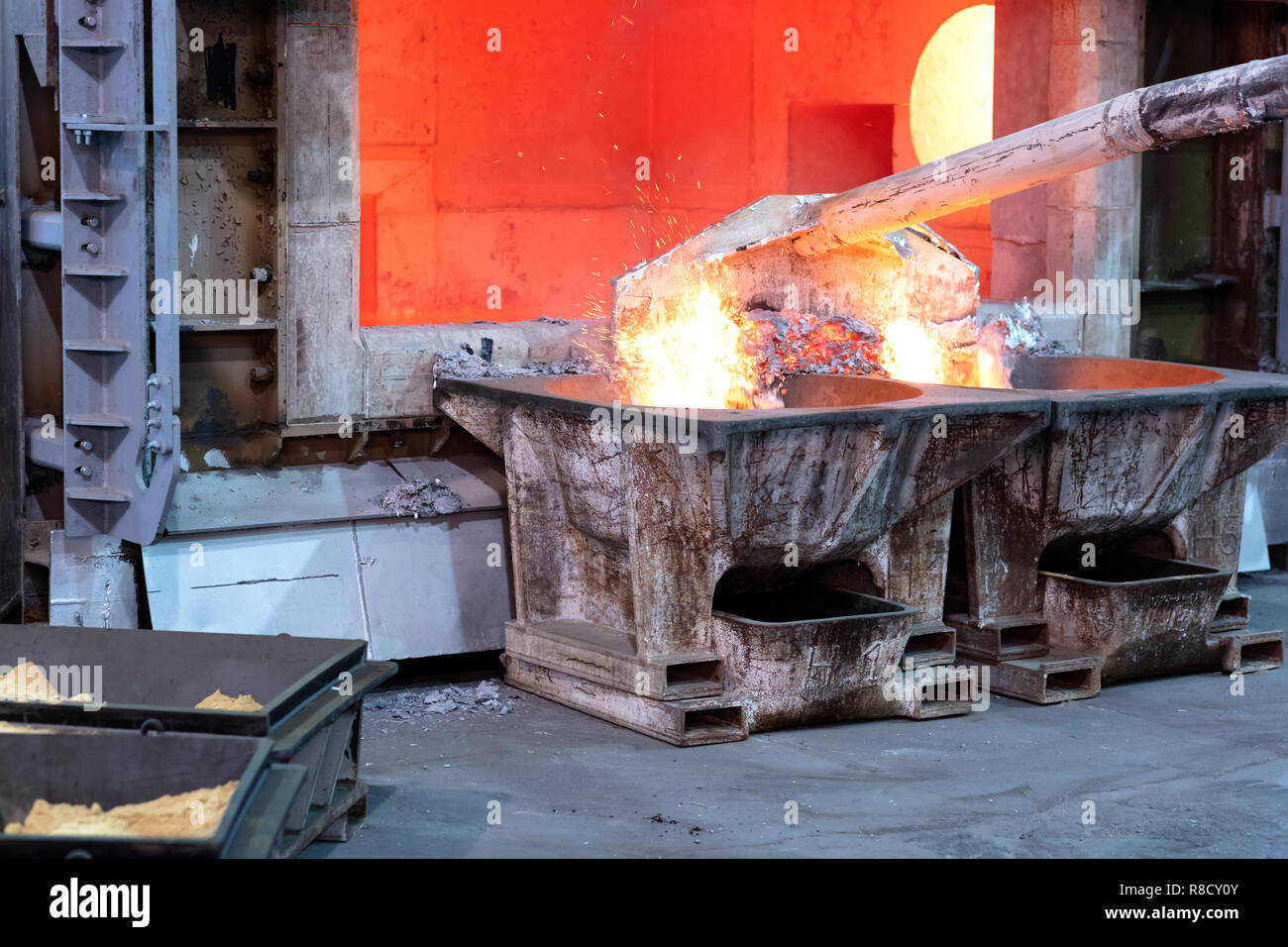
Future Patterns in Aluminum Foundry Innovation for Transport Industries
Increasingly, innovations in aluminum foundry innovation are forming the future of the transportation industries, especially in aerospace and automobile fields. Innovations in automated spreading procedures are enhancing performance and accuracy, decreasing production times while decreasing waste. Methods such as 3D printing and additive production are getting traction, allowing for the development of complicated geometries that enhance weight and performance.
Additionally, the combination of smart modern technologies and data analytics is facilitating real-time surveillance of foundry operations, enhancing top quality control and uniformity. As sustainability comes to be a priority, recycling efforts are anticipated to grow, enabling the reuse of aluminum scrap, which is both cost-efficient and ecologically pleasant.
The development of sophisticated alloys will certainly enable manufacturers to create lighter, stronger elements, straight adding to improved fuel effectiveness in automobiles. In general, these fads are readied to revolutionize aluminum shop techniques, keeping rate with the progressing demands of the transport industries.
Often Asked Concerns
Exactly How Do Aluminum Foundries Ensure Safety for Workers?
Aluminum foundries prioritize worker safety and security by applying strenuous training programs, preserving appropriate ventilation systems, utilizing personal safety devices, performing routine security audits, and adhering to market regulations, creating a safe environment for all staff members.
What Are the Common Issues in Aluminum Castings?
Usual defects in aluminum spreadings consist of porosity, shrinking, additions, and surface area blemishes. These problems can arise from poor mold and mildew layout, insufficient pouring techniques, or contamination, ultimately influencing the quality and performance of the end product.
Just How Do Aluminum Foundries Take Care Of Recycling of Scrap Products?
Aluminum foundries effectively take care of scrap material recycling by gathering, arranging, and thawing down aluminum waste. This process minimizes environmental effect, minimizes production costs, and ensures a sustainable supply of resources for future casting operations.
What Qualifications Should Aluminum Foundries Have?
Aluminum foundries must have certifications such as ISO 9001 for high quality monitoring, ISO 14001 for environmental administration, and specific aerospace or auto standards like AS9100 or IATF 16949 to guarantee conformity and quality in manufacturing processes.
Just How Does Weather Influence Aluminum Casting Processes?
Climate considerably affects aluminum spreading procedures by impacting temperatures and humidity degrees. High moisture can lead to moisture-related defects, while extreme temperature levels may alter metal properties, inevitably affecting the top quality and consistency of the last cast items.